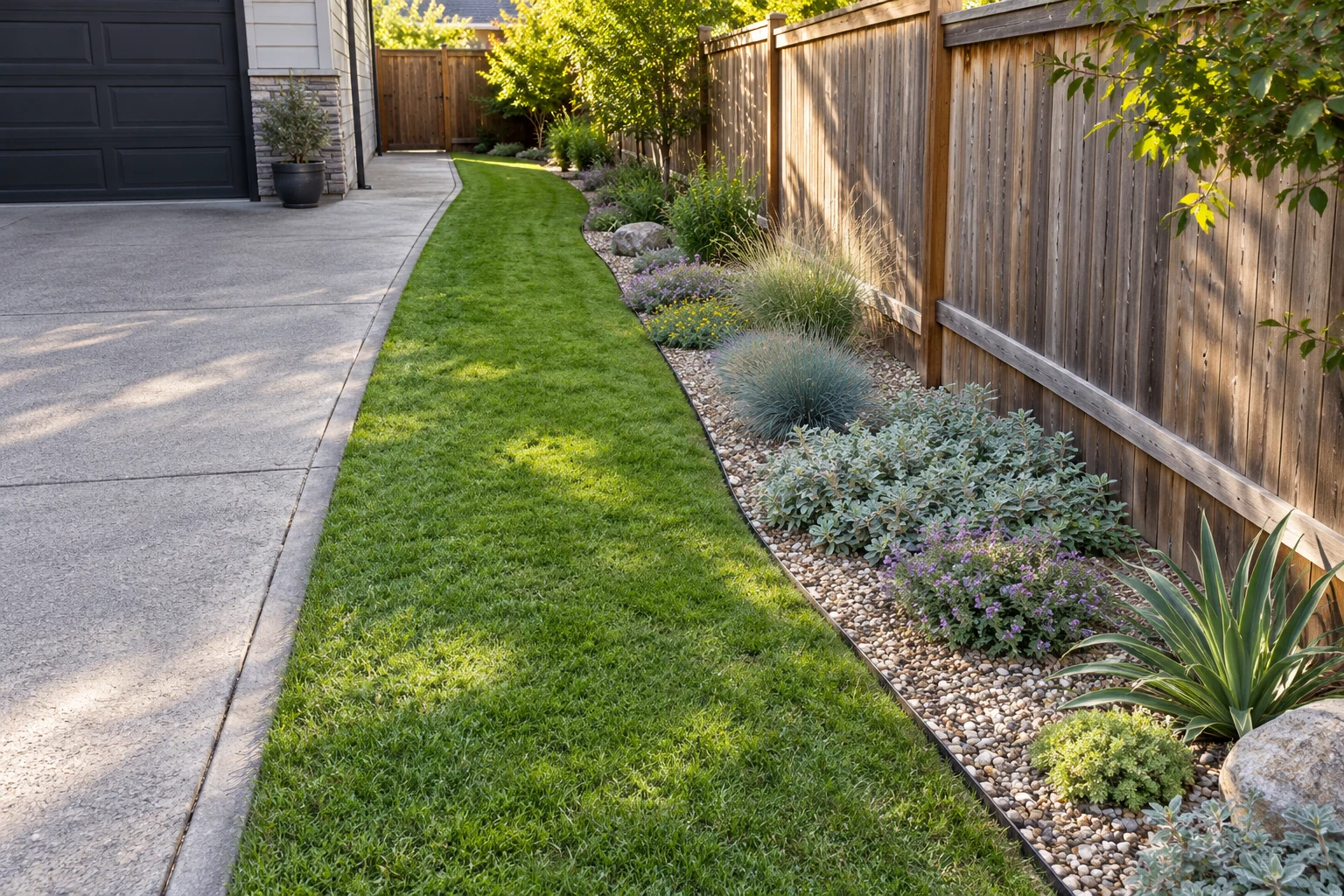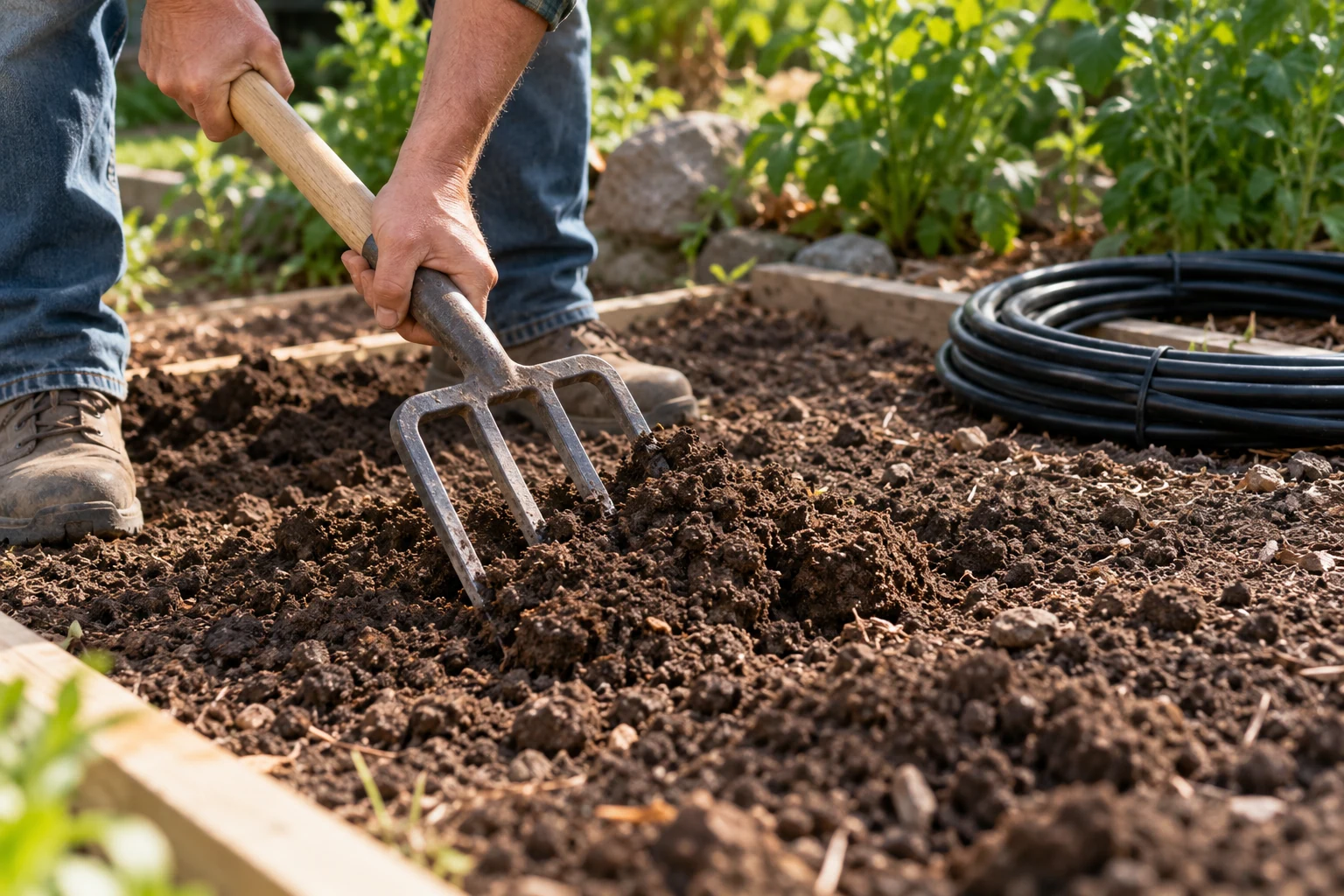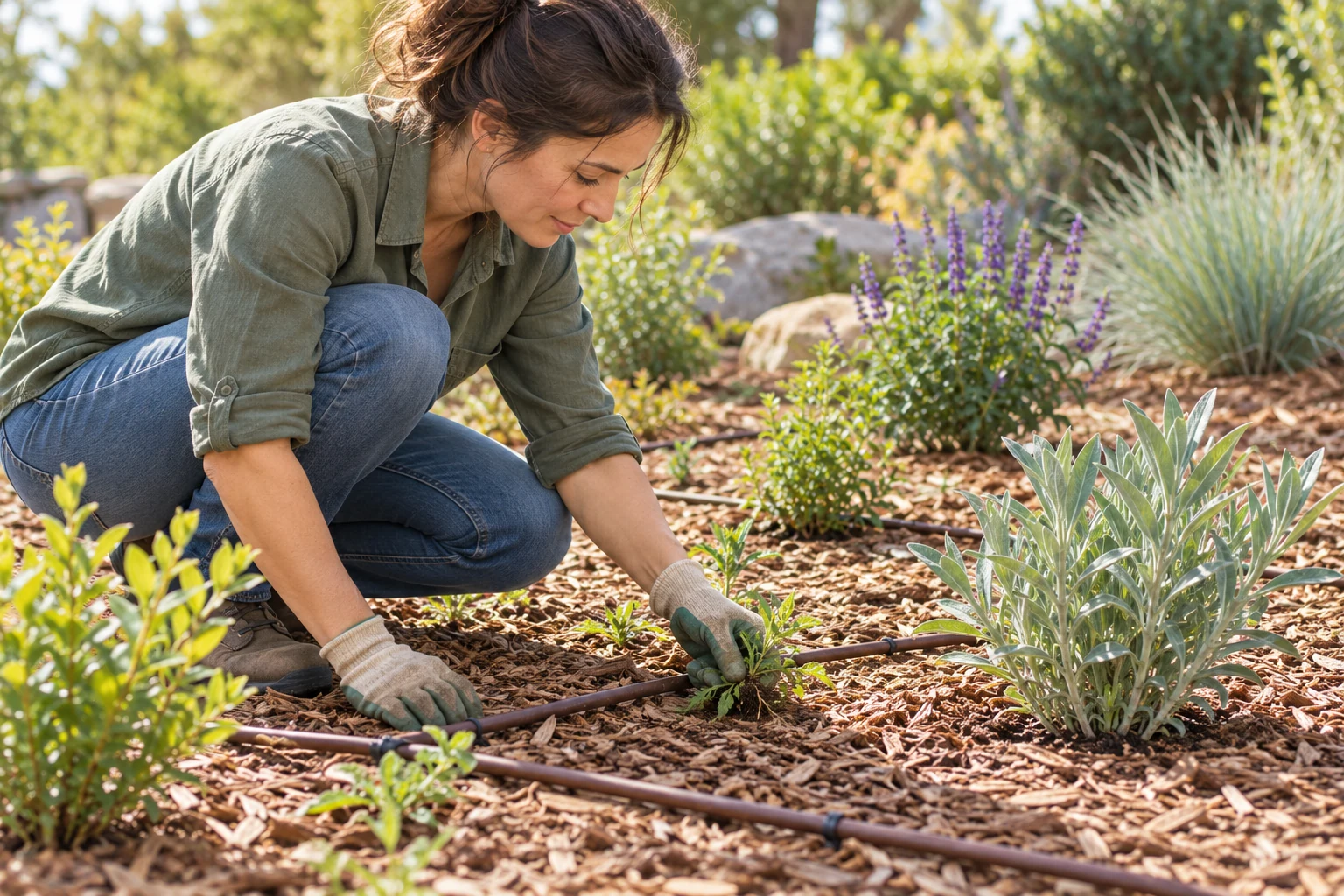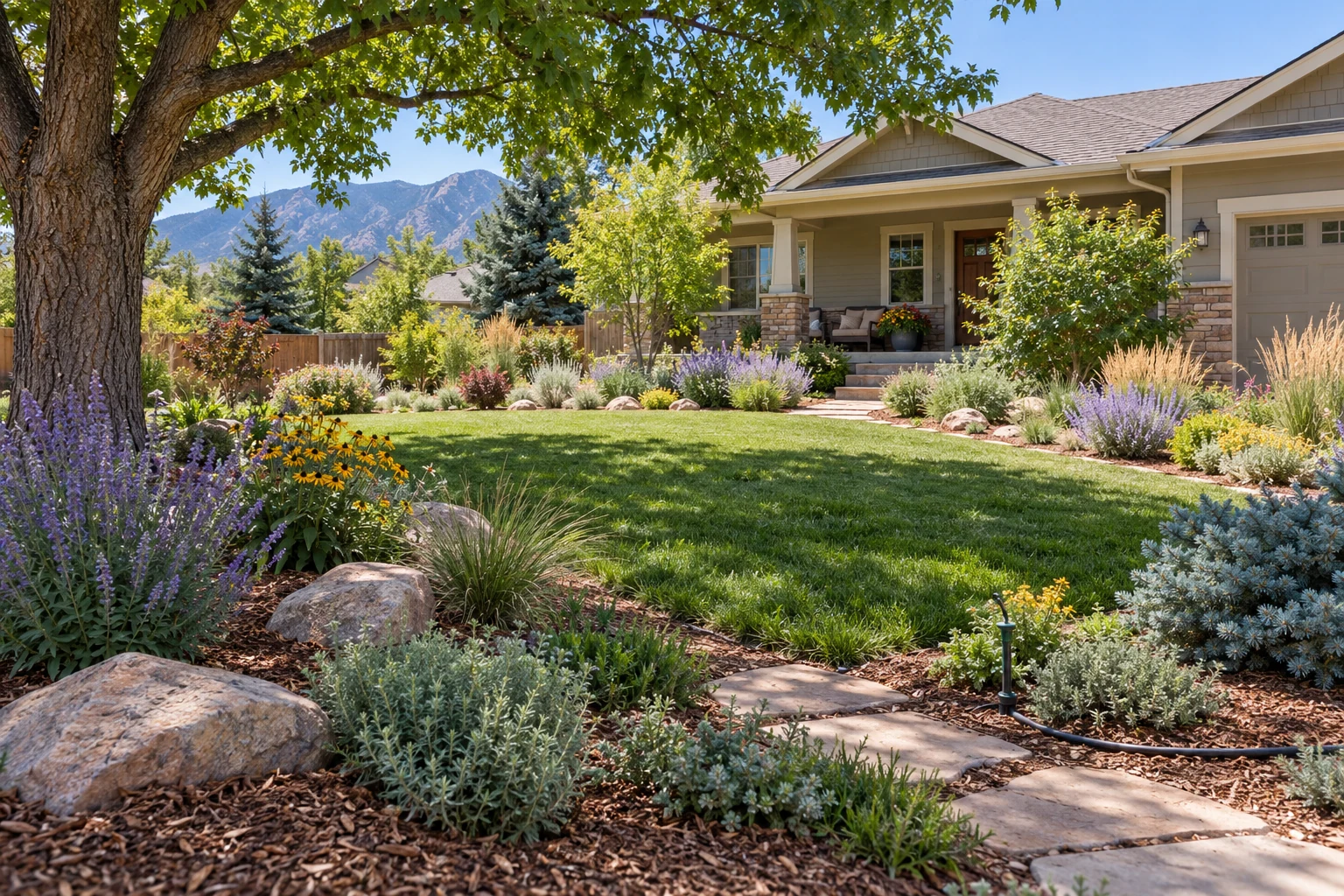
An established yard can become a more water-efficient landscape without losing its usefulness. Outdoor watering can account for as much as half of household water use, making the lawn and garden worthwhile places to review. A retrofit can focus on selected areas rather than the entire property. Priorities include replacing difficult turf, adjusting irrigation to serve plants instead of pavement, and allowing new drought-tolerant plants enough water to establish. On slopes or compacted ground, cycle-and-soak irrigation can help limit runoff. ## Begin with the lawn that creates the most work Walk through the yard and consider what each patch of grass contributes. Keep the areas that serve as play space or withstand regular use by pets. Then examine fence edges, awkward corners, steep slopes, and narrow strips beside paving. These are useful starting points for a conversion because watering or mowing them can be difficult. Choose one manageable area for the first phase. For that space, decide whether reshaping the lawn would make sprinkler coverage more practical or whether replacing it with appropriately watered xeric plants would better suit the site. Grass strips under eight feet wide are difficult to water effectively with spray heads. Replacing lawn with a perennial bed does not automatically reduce demand: some perennials use as much water as turf, or more. Colorado-native and adapted plants provide lower-water options, but plants sharing an irrigation zone should have similar moisture needs. Existing trees also need attention. A tree that has depended on lawn irrigation can suffer severe stress or die if that supply disappears. Some trees can be weaned gradually over years; others need supplemental watering throughout their lives. ## Plan plants and watering together Before removing the selected lawn, work out how the replacement planting and any existing trees will receive water. Treat tree watering as part of the conversion plan. If you cannot identify a tree or judge its continuing needs, ask your local Extension office for guidance. Arrange new plants in groups with matching water requirements, then choose combinations that work together in bloom time, texture, shape, and size. Research the plants before buying, including whether they could escape into surrounding habitats. Drought tolerance is one selection criterion; suitability for the site still matters. ## Prepare the ground before planting Clear the conversion area of unwanted plants and landscape fabric, setting aside reusable mulch that remains in good condition. Make sure turf and weeds are dead or removed before continuing. Next, assess the soil rather than automatically adding amendments. If it is compacted, gently lift it with a spade or garden fork to create air spaces. A soil test can help clarify texture, organic matter, and nutrient availability. Keep foot and vehicle traffic off wet planting soil. With the ground prepared, adjust irrigation for the new layout, considering both mature plant size and access for future maintenance. Most drought-tolerant plants do not need soil amendments and perform better over time in lean soil resembling regional conditions. They do, however, need regular water after transplanting or seeding. Establishment can take days to years, depending on plant size; smaller plants generally establish faster. Mulch helps reduce evaporation and soil compaction. Organic materials retain moisture, while gravel can suit many native and drought-tolerant plants by allowing water to drain away from their crowns. Weed barrier fabric is unnecessary beneath mulch and can restrict air and water exchange without preventing weeds in permanent plantings. ## Give the new garden an establishment period Schedule the conversion for a time when you can supply the water new plants require. A plant's eventual drought tolerance should not determine its watering immediately after planting. Keep checking its needs as it establishes, and reduce supplemental water gradually only once it is well established. Select mulch to suit the plants as well as the appearance you want. Think about the surface conditions in their native habitat. Where you retain higher-water plants, drip irrigation combined with three to four inches of woodchip mulch can help reduce the water needed to maintain them. ## Make observation part of maintenance Build regular garden checks into the project from the start. Look for weeds, observe how plants are growing, and revisit the irrigation schedule as the season progresses. Water requirements can change with plant growth: some plants need more supplemental water as they become larger, while others need less. Use what you learn from the first converted area to guide the next phase. A manageable garden gives you room to understand its maintenance demands and see which plants perform well in your yard. Expand the retrofit as your experience with the planting develops.